Showing posts with label Games. Show all posts

Sunday, February 26, 2017

What's your next move?

Our presentation from Math in Action 2017


Description
Games are an effective way to engage students in learning. Participants will experience how to support the development of pre-adolescent mathematicians through purposeful play. [Grades 3-5]


Consider what you think it means to effectively teach mathematics. Now take the Simile Survey provided below. What are the characteristics of your simile selection that relate to good mathematics teaching?
A while back, Dr. Doug Fisher introduced me to another teaching simile: Teaching is like being an expert commentator. During the lesson, the teacher highlights important aspects of the "routine" that the student might otherwise overlook. In cases where the action moves too quick, the teacher might need to "rewind and show it in slow motion" in order to clarify some move. Here is an example from the 2016 U.S. Olympic Trials that demonstrates these characteristics. So what does this look like in math class?

Imagine we are in a 3rd-grade class playing BINGO. If the students are fluent in reading number symbols, there's not much to the game. So let's break it - add another dimension by allowing players to decompose the number that's called.
If you were in a 5th-grade class, they might ask why they can't decompose the called number into more than two addends ... or use operations other than addition. Then the challenge might be, "Can I get a BINGO with just one number called?"

After (or during the game), what sorts of things would you want the students to notice? What would you highlight and maybe have to slow down? It depends on the game and our players.
  • If I was playing the regular game of BINGO with young kids still struggling with number recognition, I might be sure to call "thirteen" and highlight ways to tell the difference between 13 and 31.
  • If we are decomposing, I might want kids to recognize that 38 can be decomposed into 30+8 or 31+7 and highlight the concept of compensation.
  • For 5th graders, I might show how "thirteen" can be written as 13+8/(9-7)-4 and highlight an important property of zero in our number system. [To demonstrate another important property of zero, ask students if they could cover the entire board if "thirteen" was called.]

It is important that teachers have the opportunity to play games before using them with their students. That way the teachers can consider possible modifications (ways to "break" the game) that would meet their students' needs. It also gives them experience playing the games that can lead to insights into important mathematical aspects encountered while playing that the teachers might want to highlight for their students.

Game Centers 
Number and Operations - Fractions 
Grades 3-5 

=====
Other Game Resources
=====

After playing the games, we reflect on our experiences using Math Teacher Chair:
  • What games did you play?
  • So what mathematical ideas would you want to highlight?
  • Now what would you do to break the game or slow down the play so students would benefit mathematically from playing?

Thanks for your participation. You can reach us using the following contact information. 


"Rocket science is child's play compared to understanding child's play."

~ Unknown


If you are attending the upcoming 2017 NCTM Annual Meeting and Exposition in San Antonio, we will be presenting this session again. 
We promise it will be better next time thanks to the feedback you've provided on your session evaluations (or in the comments below).

Thursday, December 1, 2016

What's the deal?

Over the past two years, #M323 teacher-leaders have designed several centers associated with Common Core State Standard 6.SPA.3. Below is one of my favorites, which I am attempting to revise for my #M221 pre-service teachers. Any feedback you are willing to provide would be appreciated.

=====
Data Set Deal
Rules
  • Remove all the face cards and Jokers from a deck of cards;
  • Deal out five cards, face down, to each player;
  • Turn over exactly three cards;
  • Determine the mode (color), median (number), and range (number) of the three cards;
  • Other players check to see that your answers are correct [1 point per correct answer];
  • Predict the mode (color), median (number), and range (number) of all five cards;
  • Turn over another card;
  • Determine the mode (color), median (number), and range (number) of the four cards;
  • Other players check to see that your answers are correct [1 point per correct answer];
  • Predict the mode (color), median (number), and range (number) of all five cards;
  • Turn over the last card;
  • Determine the mode (color), median (number), and range (number) of all five cards;
  • Other players check to see that your answers are correct [1 point per correct answer];
  • Check to see which of your predictions were correct [2 points per correct answer]; and
  • The winner is the first one to 21 points.

Score Sheet
=====
Please leave any questions or suggestions in the comments. Thanks!

Thursday, May 5, 2016

How does a mathematician see the world?

And how does a math teacher help learners to see the world through a mathematician's eyes?
This was a major challenge during the past semester in my Intermediate Algebra sections. Many of the students came to class expecting me to show them a procedure that they would practice until test time - when they would reproduce the procedure and promptly forget it. Nearly all of the students had seen the Intermediate Algebra content in high school (linear, quadratic, and exponential functions) but it hadn't stuck.

This was the problem. They had seen the content. Now it was time for them to use it to see the world. So I shared pictures and videos and asked them to look at them through a mathematical lens.


At one point, a student said, "Just once, I wish I could see the world through your eyes." Exactly! Unfortunately, they were often so afraid of making a mistake, of breaking the mathematical glasses, that they were not willing to even put them on. They did not know how to be playful with the math we were exploring.

So I introduced them to Yes, And ...; this is a problem finding activity that I developed using a well-know improv game where participants accept and build on the ideas of their partners. Here are the instructions for my version:
  • Provide a mathematical context (often pictures or videos) but without any identified problem;
  • Pair up the students and find a fun way to identify Student A;
  • Student A picks one of the contexts and finds a problem to solve;
  • For one minute (this is usually enough time to get started without completely solving the problem), Student A talks through his or her thinking while Student B writes as much as possible down on a piece of paper;
  • After one minute, the students switch roles. I say, "Yes, and ...," to signal the switch and to emphasize that Student B ought to build on the work that was already done.
  • Student B thinks out loud for one minute while Student A records the thinking on the same paper.
  • After one minute, I say, "Yes, and ...," and the roles reverse again.
Yes, And ... can go on as long as the teacher wants. I found six minutes (three rounds) to be about right the first time we played the game. One student submitted this to demonstrate her engagement with the task.


I cannot claim for certain that Yes, And ... changed my students' view of mathematics or helped them to see the world through a mathematical lens. What I know is that for six minutes they played with math. It's a start.


Thursday, December 31, 2015

How did Bi-N-Bi go?

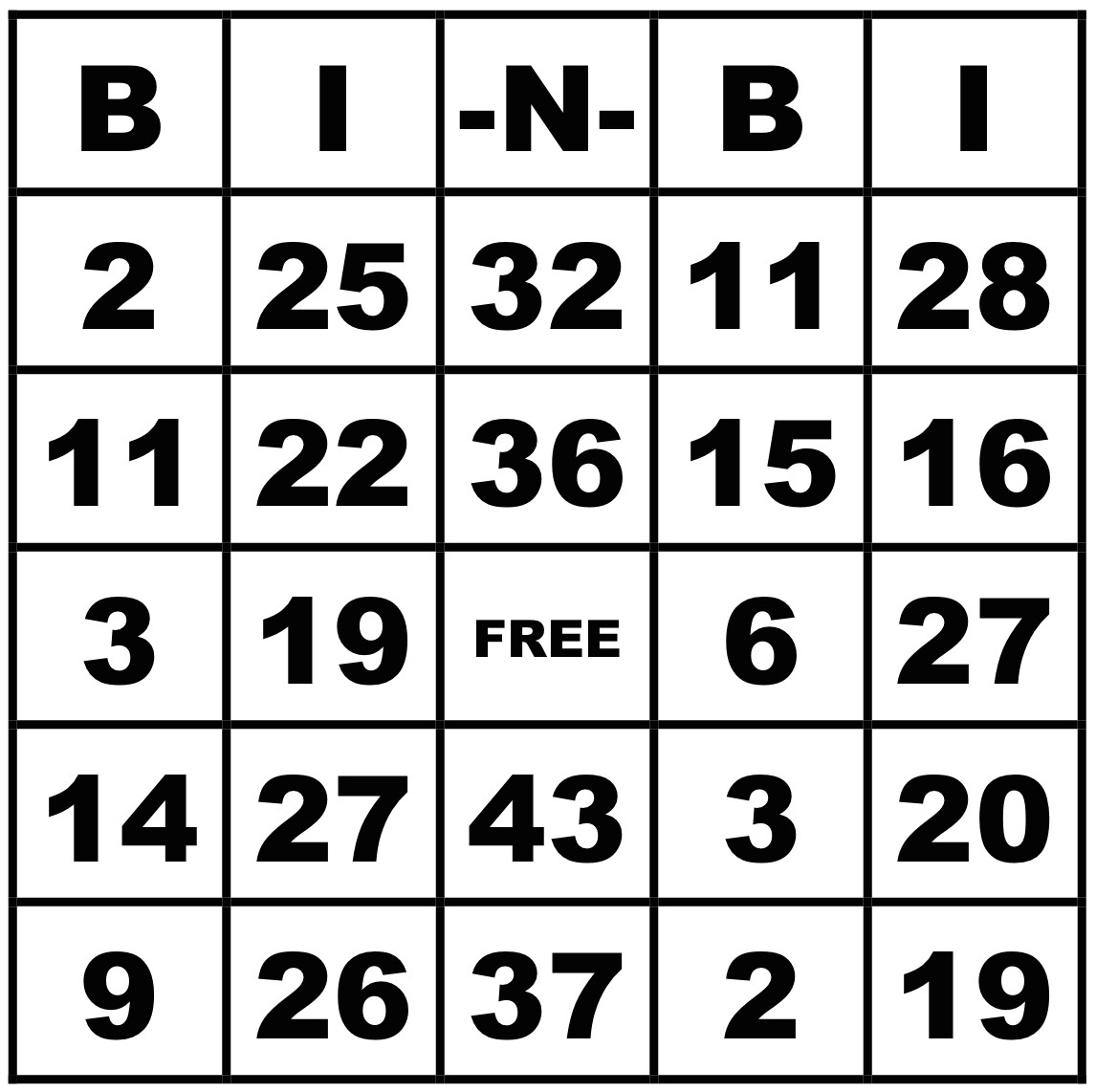
Awhile back, I promised to tell you how it went when I tried out a new game I developed while playing Bingo with Dad. Bi-N-Bi, or Decomposition Bingo, is an attempt to add a bit of strategy into the familiar game. Instead of finding a called number, you use a modified Bingo Board to try to find a pair of numbers that sum to the called number. At least that was the plan when I began testing it out with a couple of classes of sixth graders. But they had some other ideas. And some of their ideas were quite good.


The first game went pretty quickly. While the Bi-N-Bi rules allow for choice, a lot of the players used the same addends to make up the sums. I had given all of the sixth graders the same board, to test out my "choice" hypothesis (that the players would create different results) but they were unsatisfied with the ties, and many asked for a different board. Having anticipated this, I had several other boards available. There weren't enough for everyone to have a different board, but they seemed satisfied with the variety.

We played another game using the different boards and the players were happier with the results. Several sixth graders called "Bi-N-Bi" at the same time but they each had different numbers covered. After claiming their prize, a Bragging Rights Trophy, I asked if they had any suggestions for improving the game. They had a few:
  • Use two or three addends;
  • Use pairs (to stay with the "bi" theme) but allow for addition or subtraction; this would allow for using traditional Bingo Cards;
  • Make the "Free" space a "Wild Card" that can be used to make a pair; I might use X to reinforce the idea of variable; and
  • Perhaps the most ambitious idea was to use all four operations and parentheses to reinforce order of operations.
We tried the three addends version. For some of the sixth graders, this was a struggle. So I tried to model some strategies for them as I walked around. For example, I would say, "46. I could use 40+1+5 or 30+11+5 or 20+11+15." These weren't necessarily numbers on their cards but simply different ways they could think about decomposing 46.

The sixth graders also wanted to try using something more than addition, so we played a version that used any combination of addition, multiplication, or parentheses. But only if they wanted, because a few of the students seemed overwhelmed by this change. A couple of winners are shown below.


At the end of the last game, I handed out Bragging Rights Trophies to everyone as a way to thank them for their help testing Bi-N-Bi. I told them that each had demonstrated that they were mathematicians. And if they ever found themselves in one of my math education classes at GVSU, they could turn the trophy in for 1,000 Bonus Points. I do what I can to encourage the next generation of Lakers and possible MTBoS participants.


Thursday, November 12, 2015

How do you play Bi-N-Bi?


I spent a lot of last winter playing Bingo with Dad - sometimes, three days each week; it was a bit much. Don't get me wrong, Bingo is a fine game. However, it isn't very challenging. 

"Find this number. And, by the way, it's in this column."

I understand the point (and keeping track of multiple cards with an "auctioneer" calling the numbers can be a struggle) but I wanted more. So I began to wonder what it would be like if I could cover a pair of numbers that summed to the number that was called. For example, 46 is called and I cover 30 and 16 instead. I tried this during a few games and found that most of the times when I could decompose a number into two addends, I was using the B and I columns. This lead me to create my own card.


I liked the simplicity of this design. It would be easy to create, and players would have to decompose numbers greater than 45. Also, because the game included the element of choice, everyone didn't need a different card. Hilary could cover 43, John could cover 22 and 21, and Andrew could cover 13 and 30. (I planned to only call the number, not the accompanying letter; this would allow players to pick numbers in any column.) Finally, I liked the name, Bi-N-Bi, because it could reinforce decomposing numbers into two (bi) addends.

Today, I tested the game out in the classroom of a teacher I've been working with this semester. For the first game, I gave everyone a copy of the card shown to the right to see if the element of choice was enough to keep it interesting. The B and I columns were repeated to make it easier for players to know what numbers were available. I started out making sure that everyone was familiar with the goal of Bingo - getting five in a row or the four corners. The sixth-graders agreed that this wasn't very challenging, and they were excited to explore the changes I was suggesting.

The last issue to address was checking to see if a winning card is accurately covered. A player cannot simply call out the numbers, as happens in the original game, since many covered numbers are the result of decomposition and not because they are directly called. I toyed with idea of players marking the number called on the two chips used to cover the addends but I found that confusing when I tried it (and it meant cleaning the chips or throwing them away afterwards - not very sustainable). So I had players write their number sentences out on scrap paper. For example, if I called 34, 8, and 22, players might write:

  • 34 = 8 + 26
  • 8 = 3 + 5
  • 22 = 0 +22

And then they'd call, "Bi-N-Bi," provide each of the number sentences, and tell which of the addends they had use in their five in a row: "On the diagonal, I covered 8, 26, free space, 3, and 22."

With the instructions out of the way, I explained to the sixth-graders that I was looking for their feedback. I wanted to know what worked, what didn't, and what we might try differently. They were eager to be a part of the testing of this prototype and said so. 

A bit more nervous than I thought I'd be, I picked the first number. How'd it go? I'll tell you - in the next post.

Friday, August 8, 2014

Where is the value in play?


This week, Kathy and I presented at the Michigan Council of Teachers of Mathematics Conference. We adapted our previous workshop on games to focus specifically on the Common Core Standards for Mathematical Practice. (Here is a PDF of the session PowerPoint.)

We used the grouping by one of the Common Core authors, William McCallum, to make the Practices more manageable for the participants. Then we concentrated our attention on Standards 7 and 8 (what McCallum refers to as "seeing structure and generalizing"). I shared how some preservice teachers had synthesized this pair into three key elements to look for while doing math:
  • Noticing: recognizing patterns by breaking things down and identifying basic structures;
  • Building: creating new knowledge by connecting ideas to what is already known; and
  • Generalizing: identifying ways to create general methods/formulas
By intentionally narrowing our focus in this way, we hoped to model the importance of highlighting learning opportunities that occur during play.

Participants were given the opportunity to play three games. Two of the games, Race to 100 and Roll a Square, provide opportunities to examine the structure of our place value system and how the structure can be used to create methods for solving double-digit combining and separating problem. We asked participants to explore the games as teachers - keeping in mind scenarios that might be used to highlight Standards 7 and 8.


I provided the following as a model scenario:
While playing Race to 100, I saw Alyssa start on 14 and roll a 10. She ended on 24. What if she rolled 3 more tens in a row? What would the Rekenrek look like at the end of each roll?
While rolling four tens in a row is unlikely, we can use the shared experience of playing the game to provide learners with a chance to notice how our place value structure can be used to build a strategy for adding 10 to a number.

By playing the games before using them with learners, the teachers can be intentional about looking for opportunities to highlight "learnable moments." Then, teachers can use reflection time to talk about scenarios they observed during  game play (during planning, during the lesson, or even imagined). This can be as simple as sharing the scenario and adding one of the questions (from this PDF) associated with the Practice Standard(s) the teacher has decided is the focus of the lesson.

Too often we do not take the time to debrief around games and make explicit some of the mathematical practices that occurred. Is it any wonder that our students respond, "Nothing," when asked by their parents or guardians what they learned in math class today. Let's not leave learning to chance and assume learners will use the skills that will help them to improve their mathematical practice.

Tuesday, April 15, 2014

When should we intervene?

More on the session
During our session at NCTMNOLA, participants explored several games that offer opportunities to encounter mathematical content and processes associated with the Common Core State Standards for grades K-2.


As the teachers played the games, or observed as others played, we asked them to keep an eye out for meaningful mathematical moments that might be shared with the entire group.

One of the games introduced many of the teachers to a new manipulative - a rekenrek
A teacher in this group anticipated that students might have a hard time following the directions for this game and treat each row as a separate roll. She wondered when to intervene if a student did this. 

Get the app
I am sure I gave her a very unsatisfying answer, "It depends."

It depends on my goal for the lesson. If the lesson is about using the structure of the rekenrek to help students visualize groups of tens and fives in regards to place value understanding, then I might intervene. However, if I want the lesson to focus on decomposing numbers in order to make groups of ten, then I might wait until the whole class discussion (reflecting on the learning); this choice allows us to talk about it as a group.

It also depends on whether or not everyone is exhibiting the same issue. I hate putting out a lot of little fires. If I saw everyone doing this, then I might intervene with the entire group since there would be a lack of diversity in what students could share during the reflection. However, if it was a single student, then I could decide whether or not to select this approach for the reflection and where in the sequence (see Orchestrating Discussions).

So let's assume that my goal was about making tens and only Patsy played the game in this way. After having a few students who followed the directions as written share, I would move our attention to her "game board."
I want to share Patsy's work because she played a slightly different game. She answered a different question. If I wanted to know what Patsy rolled during each turn, I could find out from her rekenrek: 10 the first roll; 7 on the second; on the third a 3 (coincidence there, eh?); 9 on the fourth; 1 on the fifth; and 4 on the sixth roll. But the game wants us to say how many beads we have total and how many we need to get to 100. So with an elbow partner, I want you to devise a plan for finding these two numbers, the total and what's left to get to 100, but don't find them - yet. Ready? Go.
Although it is not what I expected (probably because it is not what I expected), I really like what Patsy's new game does for the lesson. In fact, I might tuck this example away for another time when we play the game. Then, if no one else plays it this way, I can still use it in our discussion because the game provides a shared context. This context, at least once, created an interesting problem for students to solve. And that was the main point of the session:


TEDxGrandValley