I might have gotten a bit ahead of myself in the last post (or perhaps I am building suspense - you decide). Before I introduce you to the Carousel Lesson Design process, let me explain a bit more about the SAFARI prototypes. This should put the framework into a clearer context.
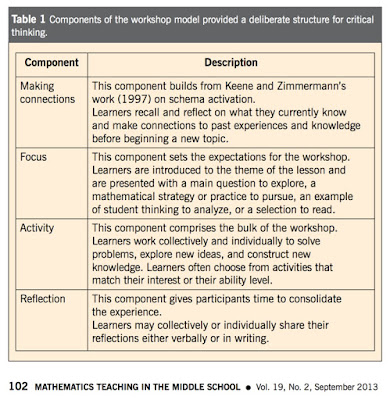
As I said, SAFARI is based on an instructional approach called the workshop model. SAFARI is an acronym for the components of the model [Schema Activation, Focus, Activity, Reflection, and "I want to ..."], and in Swahili it means journey. So in designing a lesson, we are thinking about it as a journey from the known to the new.
One thing that design thinking has shown me, is that this journey also reflects the flair and focus necessary for innovative thinking.

The Schema Activation begins with a flair. Sometimes referred to as the anticipatory set, it ought to be an open-ended invitation for everyone to join the journey. Next, the lesson quite literally Focuses the learners' attention on what to look for during the journey; this might be a "think aloud" in typical workshop lessons. Entering the Activity portion, the lesson once again flairs - allowing each learner room to roam. Here you might encounter what Dr. Jo Boaler refers to as a "low floor, high ceiling" task. After a set amount of time exploring, we refocus by Reflecting on what was important during the activity. We should not wait until everyone is finished before making time to consolidate our thinking. In fact, we want students to cry out for more time; it's what Ellin Keene calls fostering learning lust. Finally, we ask learners to consider what comes next by brainstorming "I want to ..." statements related to the lesson. Perhaps they want to spend more time exploring the task they didn't finish. This represents the final flair until tomorrow when the journey starts all over again.
After explaining the components to my teachers, I give them 10 minutes to develop three different SAFARI lessons related to some topic.

At the end of the 10 minutes, I ask the teachers to share their prototypes with a peer for feedback. The teachers are often resistant to share unfinished products because of the implicit need for perfection usually associated with typical lesson plans. I remind them, however, that they had, on average, three-and-a-third minutes on each prototype. So no one expects their lessons to be perfect.
Afterwards, the teachers express appreciation for the process. Not only have they outlined three possible lessons that they could use in their classrooms, but because the lessons were incomplete their peers were able to add innovative ideas in the blank-spaces. "I wouldn' have thought of doing it that way," one teacher admitted. She continued, "And if I had created a full-blown lesson plan, I don't think [the other teacher] would have been able to see and share this amazing idea."

It's a good reminder that the creative process is often about finding and cultivating the cracks that allow new ideas to grow. So how does this get any better? Here's what you've been waiting for - the Carousel Lesson Design ... in the next post.