Showing posts with label MTBoS. Show all posts

Thursday, December 31, 2015

How did Bi-N-Bi go?

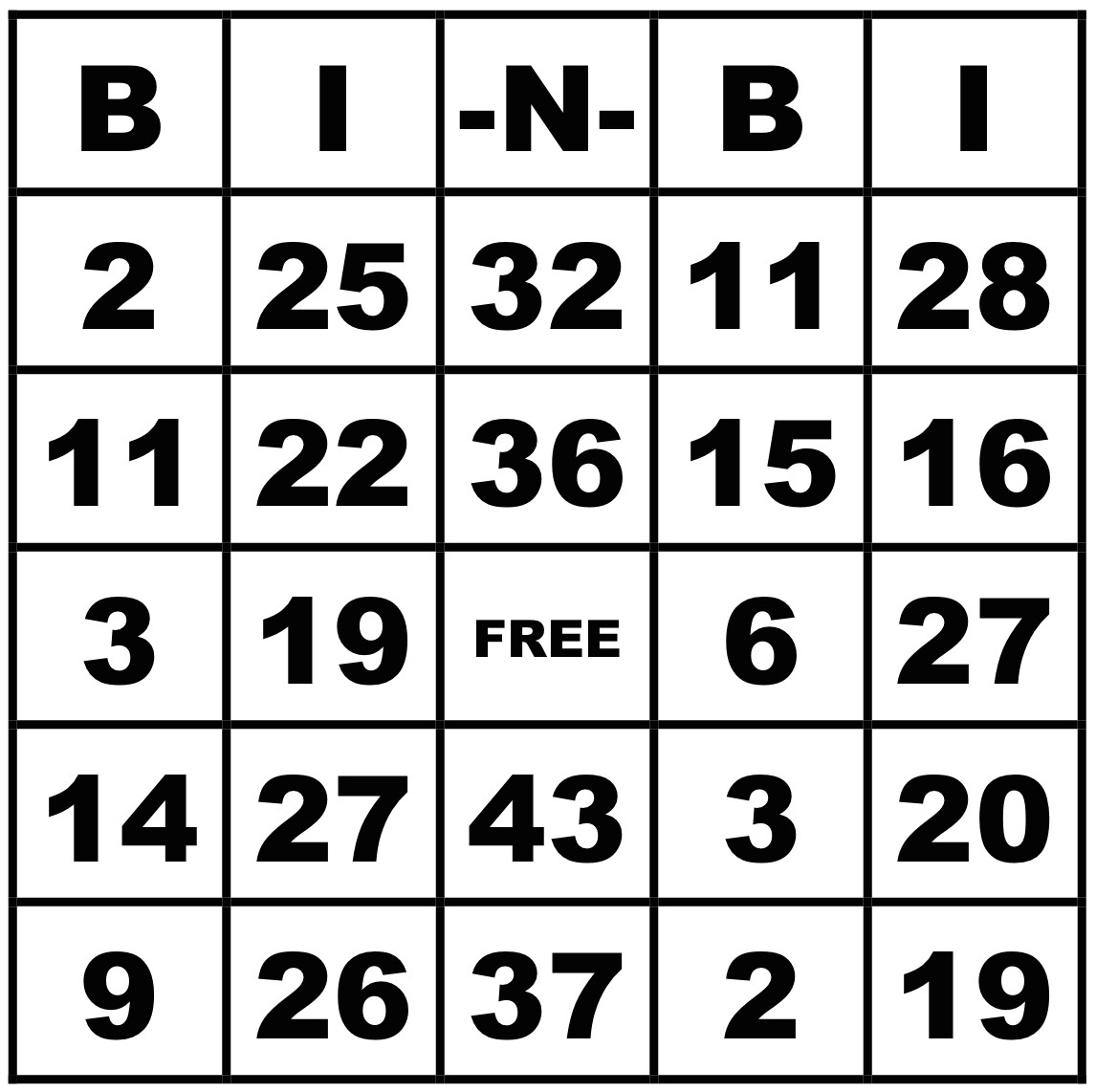
Awhile back, I promised to tell you how it went when I tried out a new game I developed while playing Bingo with Dad. Bi-N-Bi, or Decomposition Bingo, is an attempt to add a bit of strategy into the familiar game. Instead of finding a called number, you use a modified Bingo Board to try to find a pair of numbers that sum to the called number. At least that was the plan when I began testing it out with a couple of classes of sixth graders. But they had some other ideas. And some of their ideas were quite good.


The first game went pretty quickly. While the Bi-N-Bi rules allow for choice, a lot of the players used the same addends to make up the sums. I had given all of the sixth graders the same board, to test out my "choice" hypothesis (that the players would create different results) but they were unsatisfied with the ties, and many asked for a different board. Having anticipated this, I had several other boards available. There weren't enough for everyone to have a different board, but they seemed satisfied with the variety.

We played another game using the different boards and the players were happier with the results. Several sixth graders called "Bi-N-Bi" at the same time but they each had different numbers covered. After claiming their prize, a Bragging Rights Trophy, I asked if they had any suggestions for improving the game. They had a few:
  • Use two or three addends;
  • Use pairs (to stay with the "bi" theme) but allow for addition or subtraction; this would allow for using traditional Bingo Cards;
  • Make the "Free" space a "Wild Card" that can be used to make a pair; I might use X to reinforce the idea of variable; and
  • Perhaps the most ambitious idea was to use all four operations and parentheses to reinforce order of operations.
We tried the three addends version. For some of the sixth graders, this was a struggle. So I tried to model some strategies for them as I walked around. For example, I would say, "46. I could use 40+1+5 or 30+11+5 or 20+11+15." These weren't necessarily numbers on their cards but simply different ways they could think about decomposing 46.

The sixth graders also wanted to try using something more than addition, so we played a version that used any combination of addition, multiplication, or parentheses. But only if they wanted, because a few of the students seemed overwhelmed by this change. A couple of winners are shown below.


At the end of the last game, I handed out Bragging Rights Trophies to everyone as a way to thank them for their help testing Bi-N-Bi. I told them that each had demonstrated that they were mathematicians. And if they ever found themselves in one of my math education classes at GVSU, they could turn the trophy in for 1,000 Bonus Points. I do what I can to encourage the next generation of Lakers and possible MTBoS participants.


Wednesday, September 23, 2015

How can we assess 3.MD.B.3?

Draw a scaled picture graph and a scaled bar graph to represent a data set with several categories. Solve one- and two-step "how many more" and "how many less" problems using information presented in scaled bar graphs. For example, draw a bar graph in which each square in the bar graph might represent 5 pets. [3.MD.B.3]
Teaching-Learning Cycle
Teachers use #MTBoS as a way to find interesting and effective math lessons. Recently, some of us have noticed that assessments are often lacking as this community shares in the work of teaching. So I am proposing the #MTBoSAP (Math Teacher Blog-o-Sphere Assessment Project) as a way to pass along our wisdom and experience assessing students in our mathematics classes. I figured I could start by sharing some work I am doing in one of my courses for preservice elementary teachers.

The teachers are currently researching assessment items related to the Measurement & Data Domain (focusing on Data) from the Common Core State Standards (CCSS) in Mathematics. One of the third-grade standards in that domain is written at the beginning of this post. Because we are partnering with a school district that uses EngageNY, we looked for assessment items that already existed within that curriculum. This is an exit ticket that we found in the Grade 3, Module 6, Lesson 4
We thought that this item did a fair job of assessing the last part of 3.MB.B.3 but completely missed the first part, "Draw a scaled picture graph and a scaled bar graph..." So we looked through the rest of the lesson and thought this item from the problem set looked promising.
This item has students "draw a scaled bar graph" (still no scaled picture graph) and asks that they solve "two-step 'how many more' and 'how many less' problems." As we thought about it further, however, we were concerned that it was not clear whether students would use the chart or the graph to answer the questions.

Therefore, I decided to try to modify the original exit ticket in order to assess more of the standard. I got rid of two of the bars and wrote questions intended to have them "draw (a part of) a scaled bar graph" and answer multi-step questions that require some "information presented in scaled bar graphs."

Please complete the bar graph using the following information. 
  • The number of books checked out on Thursday was 10 more than the number of books checked out on Tuesday. Draw the Thursday bar.
  • 1,480 books were checked out Monday through Friday. Draw the Friday bar.

What are your thoughts about using this modified assessment item to gather data on students' mathematical understanding related to 3.MD.B.3? Do you have a good item for this standard that you'd be willing to share? If so, please share the item or a link to the item in the comments. Also, If you have any other effective CCSS assessment items, please share them on Twitter using #MTBoSAP. Thank you in advance for all you do to advance the profession.

Sunday, April 5, 2015

Which way? (What does it mean to TLAC, Part 2)

In the previous post, an anonymous guest blogger chronicled the training they received in order to use Doug Lemov's "taxonomy of effective teaching practice" as a tool for teacher development. The training made them more than a little uncomfortable. We learn why in Part 2.

*****

Before getting into the nitty-gritty, let me preface: My stance on teacher training (fast-track, traditional, whatever) and Teach Like a Champion [TLAC] is complicated. I worry that codifying teaching downplays the importance of critical thinking and creativity among teachers and, more importantly, among their students. I believe that there is some real tension at play, here, which I see (primarily) in two arenas:
  1. Yes, we need to help teachers develop skills that will help them to stay afloat—but what about cultivating an interest in and passion for the things that make teaching awesome? (You know—moments like this and this and this and a million more.) 
  2. It’s great to provide teachers with the opportunity for methodic practice in a safe setting (where no children will suffer from novice teacher errors)—but isn’t it, well, weird, this enthusiastic offering up of a step-by-step recipe for success? (Good teachers know better than to dumb down a complex concept into a set of instructions to be followed blindly.)

I’ve been grappling with these dilemmas since re-signing my contract—committing, in a sense, to being a Lemov apostle. In effort to come to peace with my uneasy feelings, I thought: What if I could turn back the clock five years to 2007, and ask the 24-year-old, first-year teacher version of me what sort of professional development would most benefit me.  What if I asked my former-self, “Hey, Pat. Would you rather do a deep analysis of your content area and explore student-driven discovery learning via rich digital media sources? Or, would you prefer to practice specific, concrete, actionable steps that you can integrate at school, tomorrow?”

I would have looked at you like you were crazy. In 2007, I wanted—was in fact desperate for—the latter.  After my five weeks of Teach for America training, I was utterly ineffective. Part of the problem was that no matter how I tried, I could not be the teacher that I wanted to be.  Perhaps the real problem, the heart of the matter, was that I had not adequately envisioned who that teacher was—how she presented material, interacted with kids, and planned lessons. Tragically, I had not formed any real opinions on what effective teaching might look like. Rather, I had adopted and internalized a few misguided ideas from various (influential) sources, which were of little use. I really and truly wanted someone to tell me what I needed to do and say so that I could just get my kids to pay attention and listen and learn something, dammit.

Here’s the catch. I can’t help but wonder if great teachers become great because they carve their own way—through trial and error, critical thinking, and meaningful collaboration. They talk to others and they think things through and they problem-solve and figure stuff out—and they expect their students to do the same.  Will my facilitation of this curriculum prevent teachers from making their own novel discoveries, and from experiencing one of the most rewarding elements of our noble profession? Or, alternatively, will this curriculum give these teachers the framework that they need, within which to freely develop their own authentic teacher identity? I’m not certain.


To Be Continued

TEDxGrandValley