Showing posts with label teacher preparation. Show all posts

Tuesday, September 12, 2017

What's your vision?

After the long winter of waiting, it was my first duty to go out lamenting. So after the first rain storm I began to get ready.
I recently heard Kent Dobson talk about this idea of "lamenting" - what is often thought of as a "vision quest." [I apologize in advance if I get some of the details wrong in this post. A lot of what I'm writing is a combination of my memory of and the connections made during his talk. Please let me know in the comments if anything needs correcting.] 

In the Lakota tradition, when a seeker comes of age, he or she goes off with an elder to "cry for a vision." After some preparation, the seeker is left alone to lament the current state of the community and seek answers in the form of a vision. From time to time, the elder looks in on the lamenting to advise and support the seeker. When the lamenting is complete, the seeker returns to the community and shares the vision. This is an important rite for the community because without new ideas, a community withers and dies.

As I begin a new year of supervising student teaching, I want this ritual to inform my work. I hope to play the role of the elder supporting coming-of-age teachers as they experience (and lament) the current circumstances in math education and seek new answers. I will listen to those answers and take them seriously because in many ways our profession is withering. And I will help the student teachers to share their visions with the larger math education community, so that these seekers might contribute to the development of our profession.

Thank you in advance for welcoming these seekers and helping to interpret and implement their visions.

Monday, June 5, 2017

What needs changing?

The Michigan Department of Education is considering changes to Michigan teacher certification and asking for feedback. Here is more information about their proposed certification structure.


Feedback is due today. (Sorry, I'm still a bit of a procrastinator.) However, if you consider yourself as having any stake in education, I encourage you to complete the survey, as soon as possible. It'll take maybe 45 minutes to watch the video and answer some questions.

For what it's worth, here's my response. (And, yes, I know I am biased.)
My issue with the structure being proposed is that it seems to presume that new teachers ought to be completely prepared upon certification. Even if we focused on giving specific grade-level certification, there is no way to address all the issues (textbooks, culture, community, resources, …) new teachers might encounter across the state (or country). Furthermore, this structure will limit the options available to teachers and potentially restrict administrators' ability to fill positions. I can imagine school districts asking for waivers to put PK-3 certified teachers in 4th grade because of a lack of options - a teacher that may have no training at that level.
I encourage that the state look at the Grand Valley State University teacher certification program as a model. We support the development of teacher-leaders in content areas by requiring even pre-service elementary teachers to get a subject major. Local districts regularly call us looking for recent majors because they know they will be content experts who can also integrate other subjects into their practice.
Also, the MDE needs to rethink professional development for inservice teachers. Because no teacher is truly finished learning, we must return to a robust professional development process that helps teachers build on current education experiences to deepen their pedagogical content knowledge in all discipline they might be teaching. Such a system is especially important now because we have so many new, inexperienced teachers entering the profession.
This professional development ought to be in partnership with accredited bodies responsible for initial teacher certification. These institutions are aware of the training new teachers bring to the profession and can provide meaningful experiences that can expand teachers’ current abilities. The experiences would be the result of the institutions and inservice teachers collaborating on areas needing improvement.
In my discipline, we often hold up Dr. Deborah Ball (former dean of the University of Michigan’s School of Education) as the model elementary math teacher. However, we fail to recognize that Dr. Ball rose to this level after identifying this as an area of weakness in her teaching – after being a certified, inservice teacher (see p. 9). She decided to do something about it by going back to school and learning more about the subject and its teaching. We need to allow all inservice teachers to follow the path from awareness to adjustment without fear of being labeled unprepared or ineffective. 
While teacher preparation institution must make changes to better prepare teacher-leaders, teacher certification is not the primary problem. A lack of opportunities for meaningful professional development is the issue. Changing teacher certification to try to address a broken inservice support system focuses our efforts in the wrong direction and may do further damage to education in Michigan.
Thank you, in advance, for your attention to this issue.

Tuesday, May 9, 2017

Wanna Play?

Grand Valley's College of Liberal Arts and Sciences has a policy that all courses must meet and have a culminating experience during finals week. Typically, I try to do something other than a traditional exam during these meetings. Most of my students are preservice teachers, and I want to offer them an alternative way to "show what they know" and reflect on the semester; this often entails presentations. But this year we decided to throw a party.

I got the idea when I attended a session at the NCTM 2017 Annual Meeting and Exposition that was led by Kassia Omohundro Wedekind and Mary Beth Dillane - "We are Mathematicians": Building Mathematical Communities Based in Sense Making, Agency, and Joy. During the session, they talked about kids at their school hosting a math party for their peer, teachers, and parents. At the party, the kids shared some of their favorite math activities. I decided this would be a great way to wrap up the semester.

We started the celebration with a popular party game: The Marshmallow Challenge.


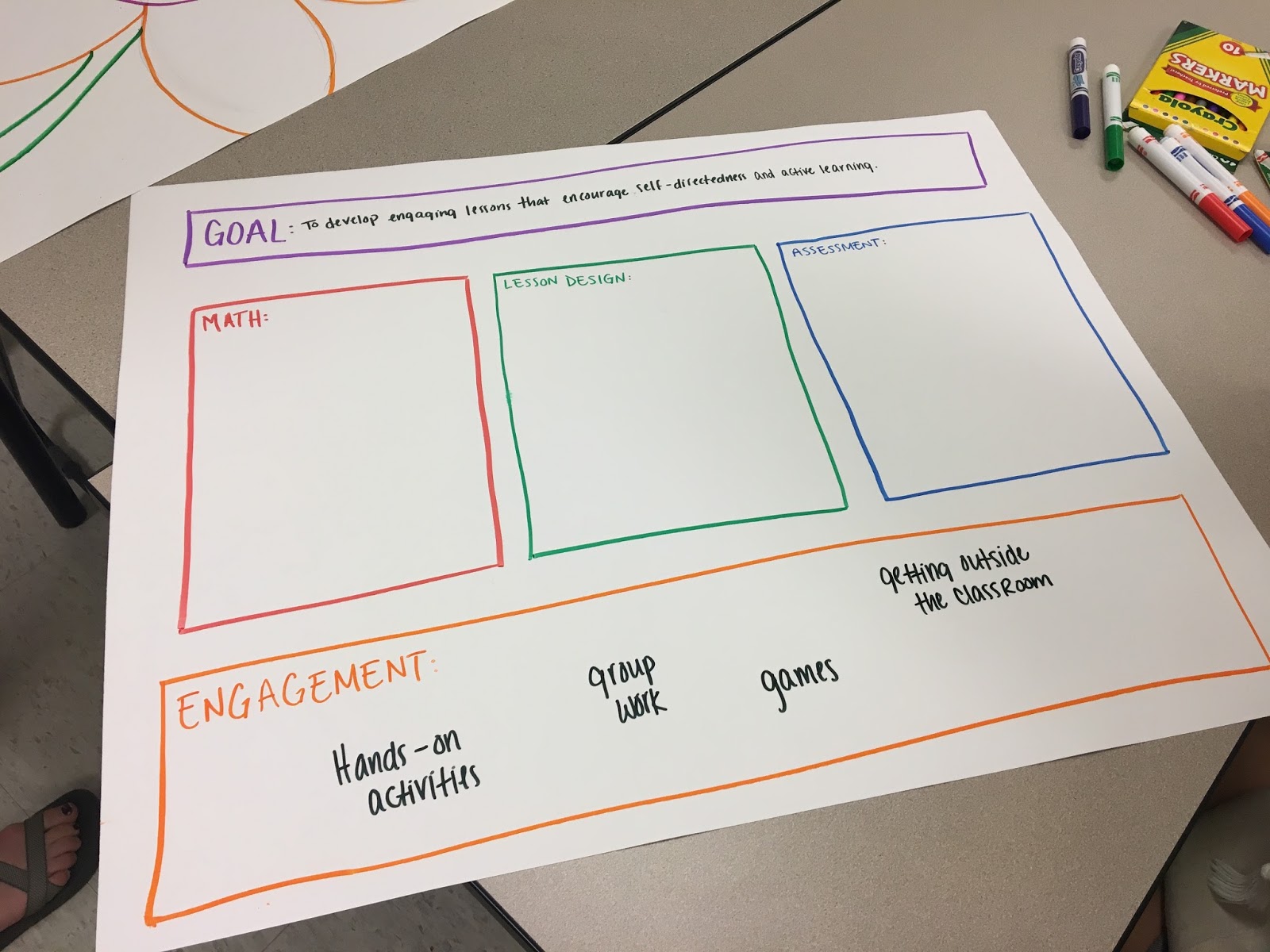
Then the pre-service elementary teachers started developing their Math Teaching Vision Boards. I got the idea from this podcast that discusses the role instructional vision has on math teachers' instructional practice.


After about 20 minutes, we were ready to share our visions. We didn't have peers, teachers, or parents at our party, so we set up a series of viewing venues arranged by group.


The sharing looked a like this:


At the end of the party, the preservice teachers gave me some feedback. One said, "That was 2 hours of reflection disguised as fun."

Another complained that they didn't get to go to the viewing parties of their table-mates. I told them that was too bad but maybe they could connect with those peers after class to talk about their visions. Then I wondered out loud, "Do you think I did that on purpose?"

Wednesday, April 29, 2015

What matters?

August 2014 - my dad, Charles, was diagnosed with a stage four, glioblastoma multiforme. Because Mom had passed away almost two years earlier and my brother resides in another state, Dad came to live with us. It made sense. Dad has had University of Michigan season football tickets for over twenty years, and cancer was not going to keep him from watching his beloved Wolverines. Although an aggressive treatment of radiation and chemotherapy left him weak, he went to every 2014 home game except for the night game against Penn State (its start time was after what had become his bedtime). The only other concern Dad had besides Michigan Football was that he not be a burden. When I asked him what his goals were during his time with us, he said, "I want you and Kathy to be successful." That was easier said than done. 

Having a stage four cancer patient in your home is difficult. When it's your strongly independent father, even more so. Kathy and I knew we were in over our heads, so we sought out and got support. Still, we were not being as successful as we had planned before Dad's diagnosis. In particular, my teaching was not getting the attention I typically give it. Feedback drafts were being given back later and later. And a teaching experiment I wanted to conduct was placed on hold. My Grand Valley colleagues and administration were extremely supportive and understanding, but I felt like I was not attending to Dad's wish.

December 2014 - my first grandchild, Vance Charles, was born. He and his parents live about an hour away, which means we get to see him quite often. Because my dad was having a hard time getting around, the new family usually came to our house to visit. Dad always lit up when he saw his great-grandson. One day, Dad and I even got to babysit. We had a great time, but when I returned to my papers and planning, I asked myself, "Am I being successful?"

After spending an amazing morning with my father and my grandchild, I hated that question and all it represented. In retrospect, I do not blame my dad for planting the idea of "success" into my thoughts. He was a teacher, too, and he was simply passing along the message that teachers get in our culture: "Your teaching matters more than anything else in your life." Truth be told, he didn't plant it. I had heard it before, but the present circumstances seemed to make it all the more powerful.

A few years back, I attended a panel discussion where a group of superintendents talked about (then) pending tenure reforms in Michigan. The audience was mostly preservice secondary teachers and one superintendent was particularly vocal about doing away with tenure. His point went something like this: "New, young teachers work hard. After awhile, though, around the time you get tenure, you often get married and have kids and then you might start slacking on your teaching. Without tenure, you'll have to keep working hard - no slacking off." I was incensed at this message that teaching was more important than family, but here I was giving it to myself. So, with the help of my friends and colleagues, I gave myself a break and made my family a priority.

Dad passed away earlier this week. Until the end, he and Vance had an amazing bond. Life is such an incredible journey, and we have so much to learn from our traveling companions. Dad taught me so much about being a parent, a partner, and a teacher. And I'm sure Vance will continue teaching me in the years to come. Together they have shown me what matters.


When it comes to my relationship with Dad, I firmly believe we experienced success.


Sunday, April 5, 2015

Which way? (What does it mean to TLAC, Part 2)

In the previous post, an anonymous guest blogger chronicled the training they received in order to use Doug Lemov's "taxonomy of effective teaching practice" as a tool for teacher development. The training made them more than a little uncomfortable. We learn why in Part 2.

*****

Before getting into the nitty-gritty, let me preface: My stance on teacher training (fast-track, traditional, whatever) and Teach Like a Champion [TLAC] is complicated. I worry that codifying teaching downplays the importance of critical thinking and creativity among teachers and, more importantly, among their students. I believe that there is some real tension at play, here, which I see (primarily) in two arenas:
  1. Yes, we need to help teachers develop skills that will help them to stay afloat—but what about cultivating an interest in and passion for the things that make teaching awesome? (You know—moments like this and this and this and a million more.) 
  2. It’s great to provide teachers with the opportunity for methodic practice in a safe setting (where no children will suffer from novice teacher errors)—but isn’t it, well, weird, this enthusiastic offering up of a step-by-step recipe for success? (Good teachers know better than to dumb down a complex concept into a set of instructions to be followed blindly.)

I’ve been grappling with these dilemmas since re-signing my contract—committing, in a sense, to being a Lemov apostle. In effort to come to peace with my uneasy feelings, I thought: What if I could turn back the clock five years to 2007, and ask the 24-year-old, first-year teacher version of me what sort of professional development would most benefit me.  What if I asked my former-self, “Hey, Pat. Would you rather do a deep analysis of your content area and explore student-driven discovery learning via rich digital media sources? Or, would you prefer to practice specific, concrete, actionable steps that you can integrate at school, tomorrow?”

I would have looked at you like you were crazy. In 2007, I wanted—was in fact desperate for—the latter.  After my five weeks of Teach for America training, I was utterly ineffective. Part of the problem was that no matter how I tried, I could not be the teacher that I wanted to be.  Perhaps the real problem, the heart of the matter, was that I had not adequately envisioned who that teacher was—how she presented material, interacted with kids, and planned lessons. Tragically, I had not formed any real opinions on what effective teaching might look like. Rather, I had adopted and internalized a few misguided ideas from various (influential) sources, which were of little use. I really and truly wanted someone to tell me what I needed to do and say so that I could just get my kids to pay attention and listen and learn something, dammit.

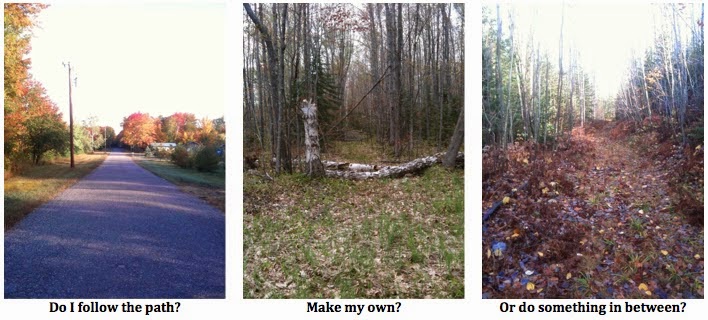
Here’s the catch. I can’t help but wonder if great teachers become great because they carve their own way—through trial and error, critical thinking, and meaningful collaboration. They talk to others and they think things through and they problem-solve and figure stuff out—and they expect their students to do the same.  Will my facilitation of this curriculum prevent teachers from making their own novel discoveries, and from experiencing one of the most rewarding elements of our noble profession? Or, alternatively, will this curriculum give these teachers the framework that they need, within which to freely develop their own authentic teacher identity? I’m not certain.


To Be Continued

TEDxGrandValley